Friday, 6 February 2015

HOW TO GET THE 1940's LOOK!

Despite the fact that fashion was rationed in WWII, women still managed to look stunning.  They mended or altered worn clothing, turned tattered lace curtains into a chic bolero jacket and used beetroot juice for lipstick.  Today it's easier to get the 1940's look, and the re-enactors can provide us with plenty of tips!


Just a classic white cotton blouse and a-line skirt, wavy hair with victory rolls, red lipstick and a matching flower can create a lively 1940's look.


This display from the Black Country Museum July 2014 (WWII event) shows us some original 1940s clothes including a red tea dance dress, a shirt dress and a tailored cream suit, and of course a hat makes the outfit!

There's plenty of original and reproduction 1940's clothes on Ebay and Amazon with brand names such as Lindy Bop and The Seamstress of Bloomsbury and also Viva-la-Roses and Collectif (Vintage) offering an excellent choice. You can also find some bargains at the vintage and antique fairs and in the charity or thrift shops. Or, just like the WWII women, you can make your own. Whatever you decide it's all about enjoying some of that magical vintage style!

Thursday, 29 January 2015

THE RE-ENACTORS AND THE SPIRIT OF THE 1940's!

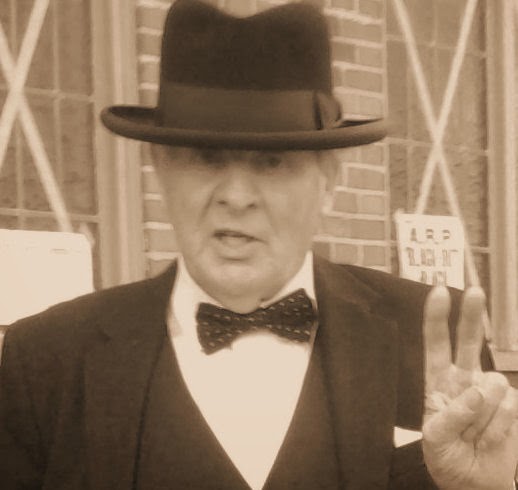
It's the re-enactors that make an event!  Without them, however authentic the venue is, it's empty.  There may be bunting, displays or steam trains but it's the re-enactors that turn the clock back and make it real, magically transporting us back in time.

Rain or shine they turn up to the many events, sometimes travelling from all over the UK throughout the season.  Sometimes they stroll or promenade.  Sometimes they bring vehicles or exhibitions and displays. They try to dress as authentically as they can and many study the history of WW11. They reminisce, share their knowledge or just give the visitors a chance to chat, and give their time freely, they are volunteers.

And it's not just the themed 1940s events that attract so many re-enactors.  There's also another growing trend for people to dress up and attend Vintage and Militaria Fairs. 

The organisers are starting to encourage this. (Pictured - Living History Re-enactment Group at Militaria, Stoneleigh 2015).  Is this a new fashion trend, keeping history alive or something more sociologically important. Or are we trying to re-create the spirit of 1940's Britain?  Whatever it is, it's a visual statement from people of all ages and all walks of life. A 21st Century phenomena!

Friday, 23 January 2015

Winston Churchill - 50th Anniversary

On the 24th January 2015, fifty years after the death of Winston Churchill, events are taking place all over the UK to mark this occasion. The tributes include a Service of Remembrance at the Houses of Parliament on January 30th at 12.40pm.  Then there is a re-creation of the funeral procession which sailed along the Thames in 1965. In the evening at Westminster Abbey there is a Service of Commemoration. The Churchill Central website has been launched especially for this occasion with lots of information about his life.

Not surprisingly, there's also lots of TV coverage about this including, Churchill: 100 Days That Saved Britain, Sunday 25th January ITV 10. 20 pm and Churchill: The Nation's Farewell, January 28th 9.00pm (a documentary) BBC 1.


"This is the lesson: never give in, never ,never, never.... in nothing great or small, large or petty....never give in except to convictions of honour and good sense. Never yield to force; never yield to the apparently overwhelming might of the enemy." At Harrow School, October 29th 1941

Source
www.nationalchurchillmuseum.org
www.independant.co.uk/news/winstonchurchill
www.churchillcentral.com

Friday, 16 January 2015

WWII WORKERS WELFARE AND BLETCHLEY PARK

You would think that in war torn Britain, workers welfare was the last thing on Churchill's mind.  Not so! The mobilisation of the British people for war included the creation of a fit and healthy work force. To build the tanks, airplanes and weapons needed to withstand a formidable enemy required careful planning, The welfare of the workforce was crucial.
Firstly the provision of nutritious food.  Canteens were introduced into the factories and many smaller work places had to make provision for the workers. Voluntary group assisted also providing hot drinks and snacks in the air raid shelters. Secondly medical officers and doctors were made available to care for the workers. Factories also had personnel to deal with any problems or issues that their staff may have. Many workers had been moved away from home and family and sometimes out of successful careers to assist the war effort. Often, people of different classes worked together.  The welfare of workers extended outside of the factories to deal with problems such as re-housing or lodgings. Every aspect of their lives was important to the war effort.
At Bletchley Park the same issues applied.  Admiral Hugh Sinclair, in charge of GCandCS, brought in a well known chef to provide staff with high quality food and lift morale. Entertainment was provided, or arranged by the code breakers themselves. During a visit Churchill noticing the lack of  recreational activities immediately arranged for the provision of sports facilities.
The engineers, dock workers and the Merchant Navy were also given recreational and dining facilities.
Finally, working hours were monitored and it was found that reasonable hours produced steady productivity avoiding illness and absenteeism. The health and safety and welfare of workers was crucial in ensuring that people could meet the demands needed of them for the war effort and to keep morale high.
The governments compulsory powers were mainly accepted and eloquent speeches from Winston Churchill rallied the people.The eyes of the world turned to Britain wondering if a democratic island nation could adapt and rise to this challenge. With help from our Allies, we could and we did!

Source
Station X The Codebreakers of Bletchley Park By Michael Smith
Britain At War  Maureen Hill
Man Power Britain's Mobilisation For War The Ministry of Information (1944)

Thursday, 8 January 2015

The BlackCountry Museum And The Homefront In WWII

It's June 1940, and Britain stands alone in the fight against the mighty German invasion!  Churchill's Homefront defences are stretched trying to withstand the never- ending aeriel attacks. The air raids present the greatest danger to the people and many respond providing help, including Air Raid Wardens, Police, rescue workers, doctors and nurses.


The Women's Voluntary Service  arranged first aid training courses and looked after those people who were hurt during the Blitz. They also provided 'Rest Centres' to give the homeless food, shelter and sanitation. The WVS worked with the Queen's Messenger Convoys delivering food to the areas that suffered from the relentless bombing.
More support was offered from the British Red Cross, St. Johns Ambulance and Civil Nursing Reserve Nurses and the ATS. First aid posts were set up in church halls, schools and hospitals. Mobile First Aid Units were sent to disaster areas to help the casualties.
The fear of losing family, friends, neighbours, homes, work-places; of spending another frightening and sleepless night in an air raid shelter, or of course losing their freedom, was part of everyday life in WWII. Despite Hitler's best efforts, the British people refuse to be undermined!

Source
Britain At War  Maureen Hill
www.wikipedia.org/
www.caringonthehomefront.org.uk
The Story Of Britain's Mobilisation For War - Ministry of Information 1944

Tuesday, 30 December 2014

World War II, The Home Guard, the New Dad's Army Film and the Spy.

Imagine the scene.  Children dressed as evacuees, on a school trip to the Seven Valley Railway.  They're happily waving flags and singing at the top of their voices,"Who do you think you are kidding Mr. Hitler?" Launched in 1968, the BBC TV series Dad's Army has brought WWII to another generation ensuring that the work of the Home Guard is remembered!

In 1939 Civil Defence plans were introduced to combat the threat of mass bombing and enemy occupation of Britain.  This included the distribution of 38 million gas masks to protect the Home Front against enemy attacks using poison gas. Local Defence Volunteers later became the Home Guard and then became known as Dad's Army, guarding the country against a threatened invasion.  Keeping watch over our coastline, public buildings, roads and railways, they also brought in enemy pilots who had baled out of damaged aircraft. Many of these volunteers had seen action during WWI and the Home Guard became a professional uniformed army equipped with weapons.
In October this year filming began on the new Dad's Army film which is set towards the end of WWII.  The discovery of a radio transmission from Walmington-on-Sea to Berlin reveals the existence of a spy.  Captain Mainwaring and his platoon are on hand to deal with this threat! Will this new remake capture the magic of the original TV show? Don't panic! With Toby Jones as Captain Mainwaring, Bill Nighy as Sgt. Wilson and Catherine Zeta Jones playing a glamourous journalist and lots of other stars including Bill  Paterson, and Tom Courtney  - it promises to be an entertaining film. It's also keeping history alive!
Source
Britain at War by Maureen Hill
Dad's Army (2015 film) https://www.wikipedia.org/

Tuesday, 23 December 2014

ROYAL AIR FORCE MUSEUM COSFORD EVENT 2015 - RE-ENACTORS REQUIRED !


WWII re-enactors are wanted for RAF Cosford Air Show on Sunday June 14th 2015.  Also vehicles are required for the1940s event taking place at the Victory Village.
Camping facilities are available on Saturday 13th June and there is a marquee for displays that need to be under cover. You can contact them via the website at www.cosfordairshow.co.uk. Their address is Royal Air Force Museum Cosford, Shiftnal, Shropshire TF11 8IP and there's also information about this event at Rods 1940s events calendar at www.40s-events.co.uk

MERRY CHRISTMAS TO ALL OUR READERS
FROM THE 1940s PICTURE POST